Keeping brand voices simple with GOV.UK
The UK government's GOV.UK website is like that sensible friend who always explains things clearly without making you feel silly. They've mastered the art of straightforward, no-nonsense communication.
Consistency is key, and GOV.UK has worked hard at ensuring cohesion across their entire site. This uniformity makes the site easier to navigate and understand.
With an incredibly diverse audience, GOV.UK have a huge job on their hands. Not only do they have to respectfully navigate highly sensitive topics (like death, disability, illness, or bankruptcy for example), they also have to be transparent enough to tell people exactly what they need to know, so they can easily take action. There is zero room for vagueness or skirting around ambiguity.
The key elements of GOV's brand voice
Respectful: they are inoffensive and sensitive to their users needs, backgrounds and circumstances. This shows that that they care and want to help.
Straightforward: their users have accessibility needs or may not speak English as a first language. Remember, they need to be inclusive, so use plain English and avoid colourful language, technical terms, humour and colloquialisms. They’re also conversational but not chatty, casual, or informal, since they still need to speak with authority.
Compassionate: they need to be sensitive (but not sympathetic) to the experiences and needs of all their users.
Neutral: they provide the facts without giving an opinion or judgement.
GOV.UK are all about ditching the jargon and using simple terms and phrases, and short sentences. They’re not about dumbing things down, but about being crystal clear, and inclusive. Their voice is designed to be clear, neutral, and accessible to everyone. Whether someone is applying for a passport, checking tax information, or understanding new policies, the language avoids technical terms and instead focuses on saying something in as simple and direct a way as possible.
For example, instead of saying:
‘Utilise the online portal to commence your application’
GOV say:
‘Use the online portal to start your application." Straight to the point and easy to grasp.’

About as neutral as you can get when talking about death
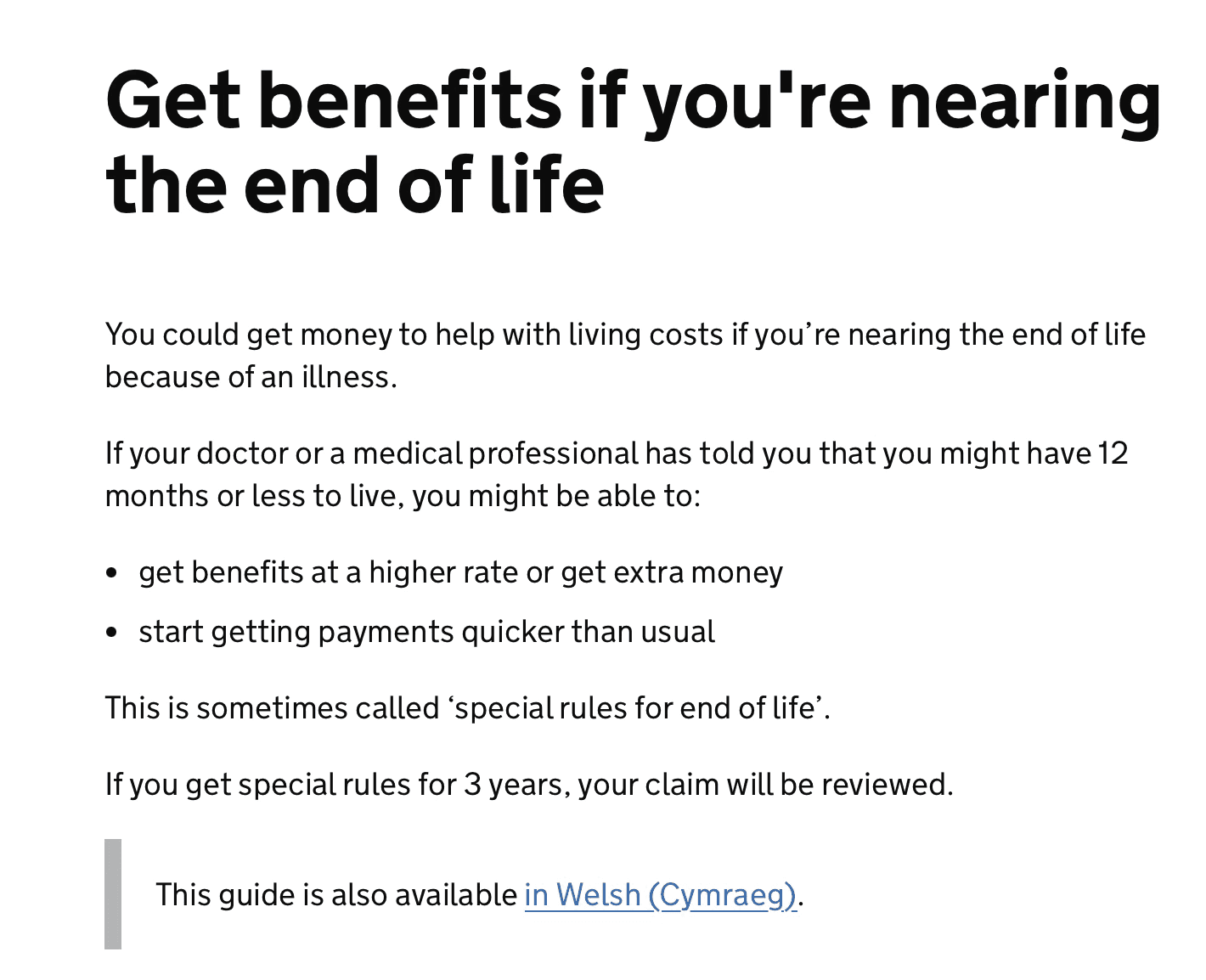
Navigating the tricky topic of death with subtlety and practicality.
But how do GOV.UK make their content feel human, when arguably their “directness” could come across as slightly robotic? One way is by using the active voice and speaking directly to their reader, using ‘you’ rather than ‘you will be’.
For example:
‘You can prove your English language ability by...' rather than 'You will be assessed on your English language ability'.
Or,
‘Please submit your application’ rather than ‘The application must be submitted by you.’
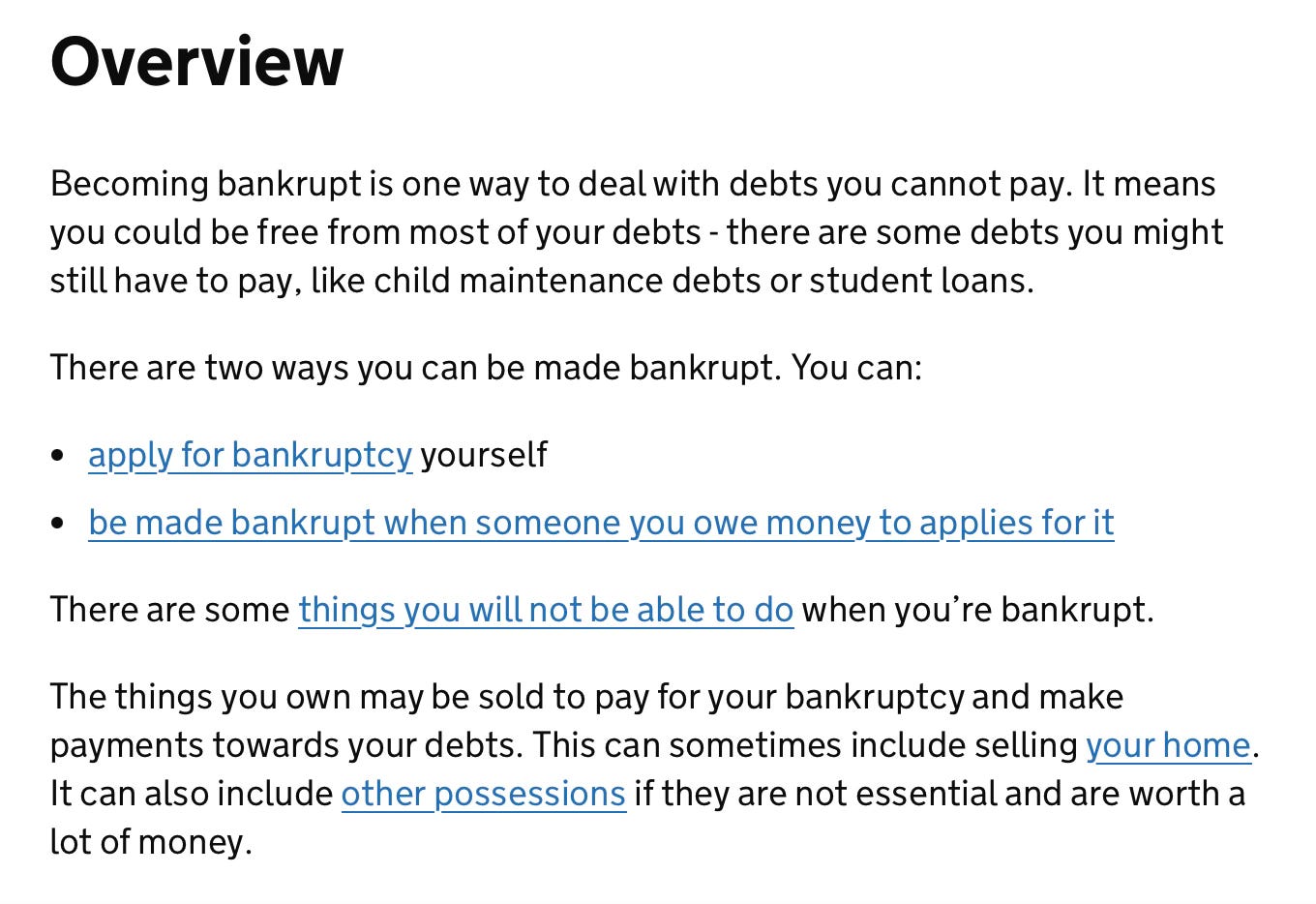
Bankruptcy is a particularly sensitive topic, but GOV nail this one too
See how by addressing users directly, the instructions become more engaging and actionable? This consistency enhances readability and ensures the information is accessible to a broad audience.
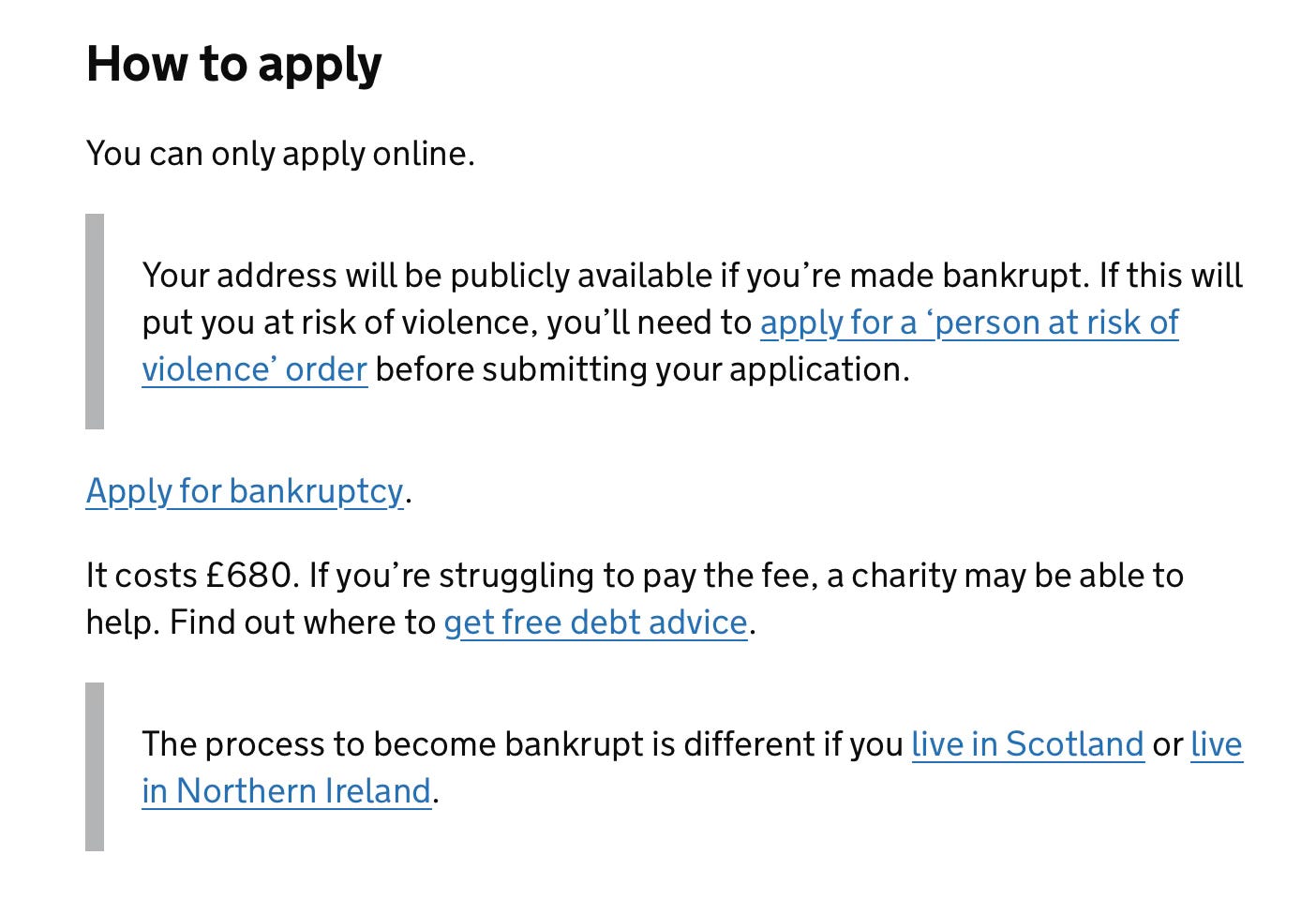
Notice words like “struggling” don’t come across as pitying or patronising, simply because the rest of the sentence gets straight to the point.
Their brand voice is empowering, respectful, simple, and clear. But I want to focus on the word ‘empowering’. What does it mean to have an empowering voice?
Actionable guidance
For GOV.UK, it means focusing on what someone can do, rather than what they can’t do or what will be done to them. Being empowering means providing options, next steps and support.
That’s why you’ll see a lot of subheadings and bullet points across GOV’s site. Not only do bullet points make text easier to read, but they help a user break down complex information, maing the information and action steps seem less exhaustive and more manageable.
Look at how their use of bullet points breaks down complex information for people and asylum seekers whose first language may not be English:
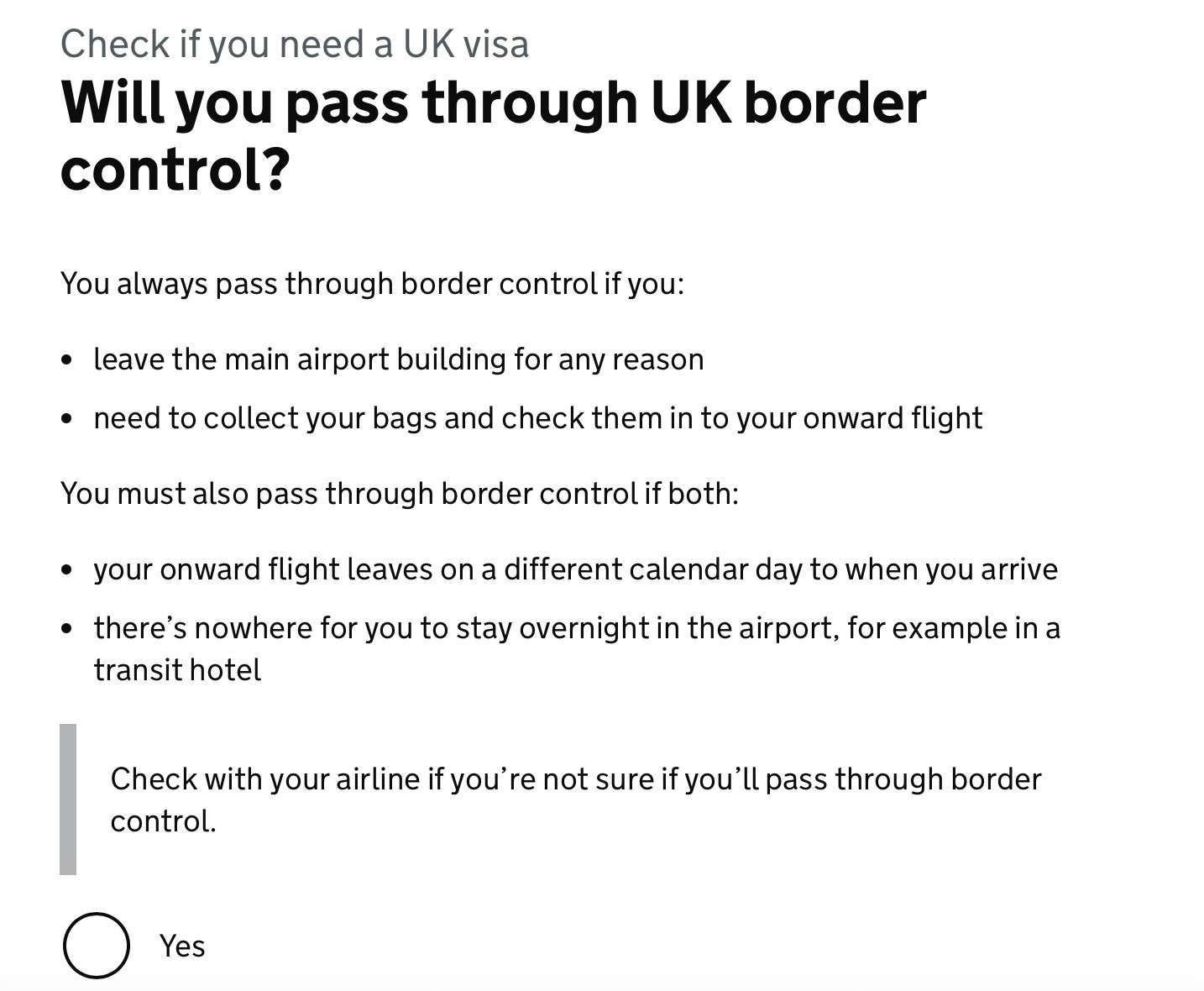
The use of bullet points helps simplify the steps for people whose first language may not be English
Notice how even though they’re speaking in a conversational way, there is still an element of authority in their tone. This is achieved through verbs like ‘must’ and ‘always’ which indicate a strong obligation or necessity. There are no ‘might’s or ‘maybe’s in sight.
*You can see a breakdown of GOV’s style and how they use content elements like bullet points in their Style Guide.
Inclusivity wins
Given the diverse audience, GOV.UK focuses on being inclusive and respectful. They are careful with language to ensure it doesn't offend or exclude anyone, and never write in a way that could make some think or feel 'this is not for me'. They choose neutral terms to avoid any unintended offense, and are careful about their use of contractions. Contractions like "you're" or "we'll" might seem too informal to some users, so they have to make sure their content meets everyone’s needs.
GOV.UK avoids government jargon and buzzwords because they know that nobody likes wading through a sea of confusing terms. They aim for clear and specific language—saying ‘Help’ rather than ‘Facilitate’. This approach ensures that the information is accessible and relatable to everyone.
Let’s talk tone
As we know, tone can change depending on the audience, context, and channel of communication. That’s why GOV has the same voice all the time, but their tone varies depending on who they’re talking to, and what they’re talking about. Like in conversation, this is about being responsive and respectful to the person and the situation.
For example, their tone becomes more chatty, informal, and varied when you chat to their virtual assistant, but the rest of their tone is direct, clear, professional and active, as people need instructional and straightforward language that helps them to complete tasks quickly and accurately.
We’ve covered some particularly difficult topics, but what about sexual assault? How do GOV handle that topic?
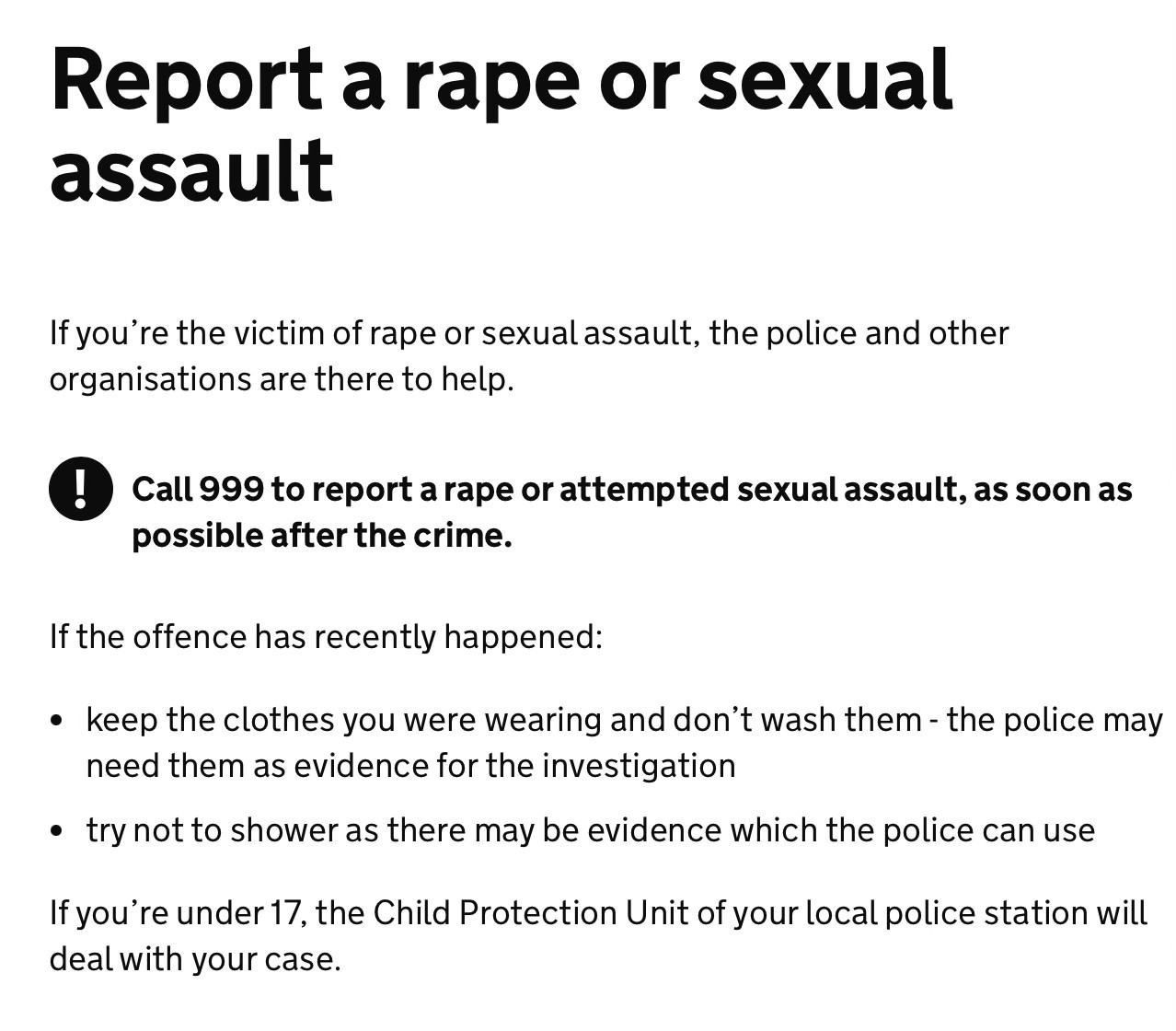
Authoritiative and clear, without showing any sign of sympathy
GOV.UK’s tone stays the same: authoritative, clear, and direct, without dialing up the sympathy (and risking making the situation worse). They remain 100% neutral, using straightforward language to deliver critical information, avoiding jargon and complex terms. For example:
"Call 999 to report a rape or attempted sexual assault, as soon as possible after the crime".
Notice that it is both concise, active, and provides immediate guidance that is actionable to the user—crucial in this particularly urgent situation.
The page also acknowledges the emotional difficulty of the situation and offers reassurance, emphasising the availability of help and the user's autonomy in deciding whether to involve the police. For example:
"If you don’t want to report it to the police... None of these organisations will make you report the assault to the police unless you want to."
GOV are respectful, without patronising the reader, and their practical information empowers users to make informed decisions about what to do next.
Takeaways
By prioritising plain language, consistency, and empathy, GOV.UK ensures that information is accessible and actionable for all users, regardless of their background or circumstances.
This approach doesn’t just build trust—it empowers people to navigate government services with confidence. A real example of what it means to be human, empathetic, and inclusive.
The UK government's GOV.UK website is like that sensible friend who always explains things clearly without making you feel silly. They've mastered the art of straightforward, no-nonsense communication.
Consistency is key, and GOV.UK has worked hard at ensuring cohesion across their entire site. This uniformity makes the site easier to navigate and understand.
With an incredibly diverse audience, GOV.UK have a huge job on their hands. Not only do they have to respectfully navigate highly sensitive topics (like death, disability, illness, or bankruptcy for example), they also have to be transparent enough to tell people exactly what they need to know, so they can easily take action. There is zero room for vagueness or skirting around ambiguity.
The key elements of GOV's brand voice
Respectful: they are inoffensive and sensitive to their users needs, backgrounds and circumstances. This shows that that they care and want to help.
Straightforward: their users have accessibility needs or may not speak English as a first language. Remember, they need to be inclusive, so use plain English and avoid colourful language, technical terms, humour and colloquialisms. They’re also conversational but not chatty, casual, or informal, since they still need to speak with authority.
Compassionate: they need to be sensitive (but not sympathetic) to the experiences and needs of all their users.
Neutral: they provide the facts without giving an opinion or judgement.
GOV.UK are all about ditching the jargon and using simple terms and phrases, and short sentences. They’re not about dumbing things down, but about being crystal clear, and inclusive. Their voice is designed to be clear, neutral, and accessible to everyone. Whether someone is applying for a passport, checking tax information, or understanding new policies, the language avoids technical terms and instead focuses on saying something in as simple and direct a way as possible.
For example, instead of saying:
‘Utilise the online portal to commence your application’
GOV say:
‘Use the online portal to start your application." Straight to the point and easy to grasp.’
About as neutral as you can get when talking about death
Navigating the tricky topic of death with subtlety and practicality.
But how do GOV.UK make their content feel human, when arguably their “directness” could come across as slightly robotic? One way is by using the active voice and speaking directly to their reader, using ‘you’ rather than ‘you will be’.
For example:
‘You can prove your English language ability by...' rather than 'You will be assessed on your English language ability'.
Or,
‘Please submit your application’ rather than ‘The application must be submitted by you.’
Bankruptcy is a particularly sensitive topic, but GOV nail this one too
See how by addressing users directly, the instructions become more engaging and actionable? This consistency enhances readability and ensures the information is accessible to a broad audience.
Notice words like “struggling” don’t come across as pitying or patronising, simply because the rest of the sentence gets straight to the point.
Their brand voice is empowering, respectful, simple, and clear. But I want to focus on the word ‘empowering’. What does it mean to have an empowering voice?
Actionable guidance
For GOV.UK, it means focusing on what someone can do, rather than what they can’t do or what will be done to them. Being empowering means providing options, next steps and support.
That’s why you’ll see a lot of subheadings and bullet points across GOV’s site. Not only do bullet points make text easier to read, but they help a user break down complex information, maing the information and action steps seem less exhaustive and more manageable.
Look at how their use of bullet points breaks down complex information for people and asylum seekers whose first language may not be English:
The use of bullet points helps simplify the steps for people whose first language may not be English
Notice how even though they’re speaking in a conversational way, there is still an element of authority in their tone. This is achieved through verbs like ‘must’ and ‘always’ which indicate a strong obligation or necessity. There are no ‘might’s or ‘maybe’s in sight.
*You can see a breakdown of GOV’s style and how they use content elements like bullet points in their Style Guide.
Inclusivity wins
Given the diverse audience, GOV.UK focuses on being inclusive and respectful. They are careful with language to ensure it doesn't offend or exclude anyone, and never write in a way that could make some think or feel 'this is not for me'. They choose neutral terms to avoid any unintended offense, and are careful about their use of contractions. Contractions like "you're" or "we'll" might seem too informal to some users, so they have to make sure their content meets everyone’s needs.
GOV.UK avoids government jargon and buzzwords because they know that nobody likes wading through a sea of confusing terms. They aim for clear and specific language—saying ‘Help’ rather than ‘Facilitate’. This approach ensures that the information is accessible and relatable to everyone.
Let’s talk tone
As we know, tone can change depending on the audience, context, and channel of communication. That’s why GOV has the same voice all the time, but their tone varies depending on who they’re talking to, and what they’re talking about. Like in conversation, this is about being responsive and respectful to the person and the situation.
For example, their tone becomes more chatty, informal, and varied when you chat to their virtual assistant, but the rest of their tone is direct, clear, professional and active, as people need instructional and straightforward language that helps them to complete tasks quickly and accurately.
We’ve covered some particularly difficult topics, but what about sexual assault? How do GOV handle that topic?
Authoritiative and clear, without showing any sign of sympathy
GOV.UK’s tone stays the same: authoritative, clear, and direct, without dialing up the sympathy (and risking making the situation worse). They remain 100% neutral, using straightforward language to deliver critical information, avoiding jargon and complex terms. For example:
"Call 999 to report a rape or attempted sexual assault, as soon as possible after the crime".
Notice that it is both concise, active, and provides immediate guidance that is actionable to the user—crucial in this particularly urgent situation.
The page also acknowledges the emotional difficulty of the situation and offers reassurance, emphasising the availability of help and the user's autonomy in deciding whether to involve the police. For example:
"If you don’t want to report it to the police... None of these organisations will make you report the assault to the police unless you want to."
GOV are respectful, without patronising the reader, and their practical information empowers users to make informed decisions about what to do next.
Takeaways
By prioritising plain language, consistency, and empathy, GOV.UK ensures that information is accessible and actionable for all users, regardless of their background or circumstances.
This approach doesn’t just build trust—it empowers people to navigate government services with confidence. A real example of what it means to be human, empathetic, and inclusive.
© Sarah Fretwell 2026